By the end of the year, a team has usually collected more than completed projects. There are the deadlines someone quietly rescued, the new colleague who found their feet, and the small favours that never made it into a report. Those moments deserve a place at the table, too.
A year-end team building event in Singapore can bring appreciation and interaction into the same afternoon. Choose a shared activity, leave time to recognise what people contributed, and finish with a meal and unhurried conversation. The aim is to celebrate the people behind the work, as well as the work itself.
At Palate Team Building Singapore, Fun Team Bonding cooking and baking activities give colleagues something to make together. For a year-end gathering, that shared task can become the centre of a celebration that feels personal to your team.
What makes a year-end team celebration meaningful?
A meaningful year-end celebration connects appreciation with time spent together. It recognises specific contributions, gives colleagues a chance to interact outside their usual roles, and leaves enough breathing room to enjoy the occasion. The most useful starting question is what you want people to feel when they leave.
Perhaps the team has delivered a major project. Perhaps it has handled a difficult period with patience and care. Some years call for a cheerful victory lap; others call for a sincere thank-you for keeping things moving when very little was straightforward.
Let that reality shape the event. A team that has spent months under pressure may welcome a lighter afternoon. A group that enjoys a little friendly competition may prefer a cooking challenge. Neither needs to become a disguised performance review.
Ask a few colleagues what they would enjoy before making the final choice. You may discover that the chance to sit and talk matters as much as the activity.
 Why celebrate the year by cooking together?
 Why celebrate the year by cooking together?
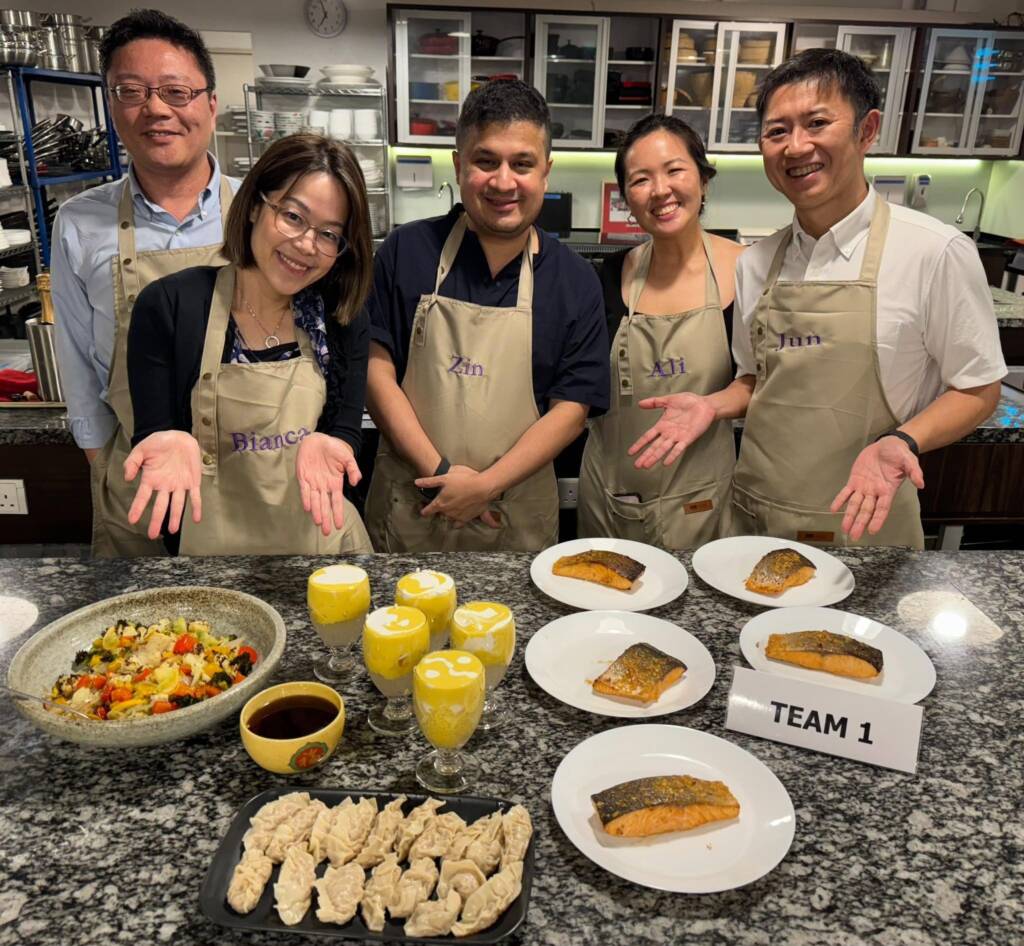
Cooking creates a shared focus that gives conversation somewhere to begin. People can divide a task, ask for help, compare ideas and enjoy the result together. For a year-end celebration, the useful combination is making something as a group and then having time to sit down and appreciate it.
Imagine colleagues deciding how to present a dish. One person has a firm opinion about colour; another is carefully wiping the edge of the plate. Someone who rarely speaks in a large meeting has a suggestion everyone wants to try. The suggestion has a practical place to go: onto a plate everyone is working on together.
You need not turn each moment into a lesson. Let people concentrate, taste, laugh and find a rhythm. The meal afterwards gives the occasion a natural second half, when the aprons can come off and the conversation can carry on.
Our guide to why companies choose culinary team building explores the wider format. At year end, keep the emphasis on enjoyment, connection and a proper thank-you.
How can you recognise success without another long speech?
Make recognition specific, brief and broad enough to include work that is easy to overlook. Name what a team achieved and how colleagues helped one another get there. Give people the option to add a thank-you, without making everyone deliver a public speech or compete for the warmest response.
Try “our year in three moments”
Before the event, invite colleagues to suggest three kinds of moments: something the team achieved, something it worked through together, and a small act of support worth remembering. Choose a few examples, with permission, for a short welcome or closing thank-you.
A successful launch might sit beside a patient handover or someone covering a difficult shift. The point is to make the contribution recognisable: “You helped the new starters settle in” says more than “Thanks for your dedication.”
Keep appreciation comfortable
Offer a written option for people who would rather not speak. Avoid surprise roasts, embarrassing awards or jokes built around mistakes. If you want table cards, a slideshow or a short recognition segment, discuss the space and timing with the organiser beforehand; these are planning ideas, not assumed programme inclusions.
Which cooking team building format suits your celebration?
 Which cooking team building format suits your celebration?
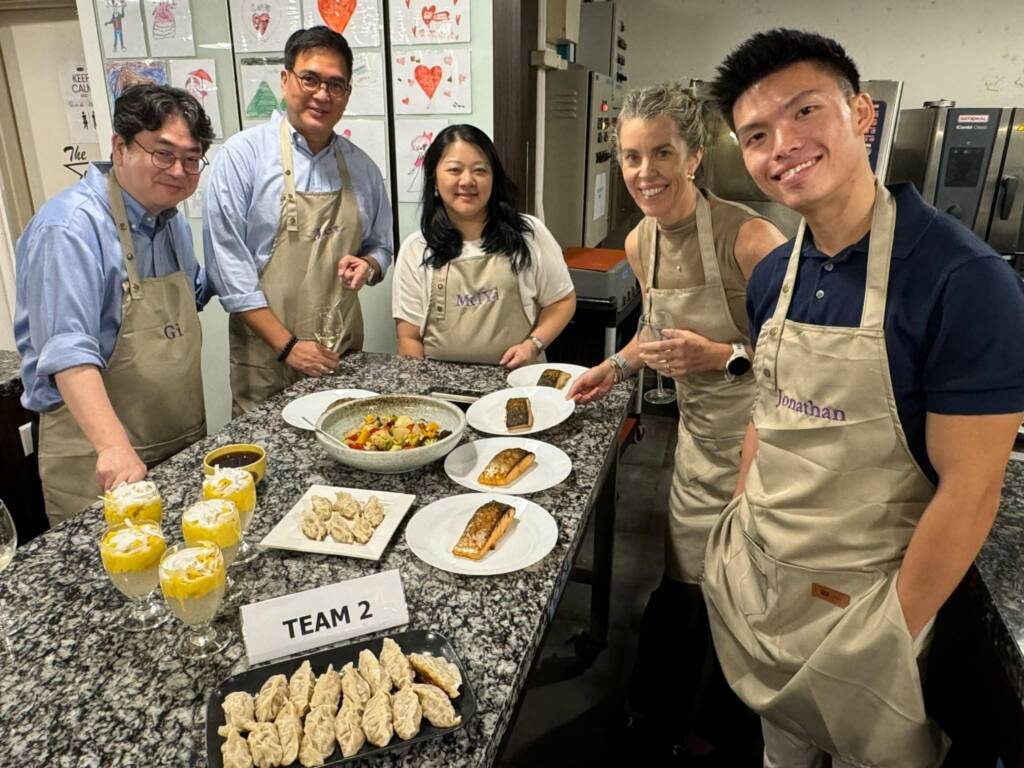
Choose the format to match the mood of your team. Fun Team Bonding can suit a celebration centred on cooking and shared enjoyment; Corporate Activity Challenge suits colleagues who welcome competition. A customised event is worth discussing when you want the theme, menu and celebration flow shaped around a particular occasion.
For a celebration with cooking at its heart
Explore Fun Team Bonding if you want a chef-led, hands-on experience. The programme includes challenge elements, so explain the atmosphere you hope to create rather than assuming it is entirely competition-free. Ask which current cooking or baking option fits your group.
For teams who enjoy friendly competition
The Corporate Activity Challenge puts planning, preparing and presenting at the centre of the activity. Choose it because your team would enjoy that energy. Keep any event prizes separate from formal employee recognition, so winning a cooking challenge does not become a judgement about someone’s work.
For a celebration shaped around your year
With Create Your Own Culinary Corporate Event, you can discuss the menu, theme, objectives and setup. Tell the team what you want to celebrate and ask how any welcome, recognition moment or shared dining time could fit. Confirm agreed details in the proposal.
How can you give the event a relaxed, thoughtful flow?
Build the occasion around a few clear moments: a warm welcome, the shared activity, a chance to eat and talk, and a short close. Leave room between them. Agree the actual running order with your organiser, because menus, cooking formats and the time your group needs will affect what is practical.
Rather than filling every pause, decide what each part of the event is for:
- The welcome: thank people for coming and name the occasion. Keep detailed business updates for another setting.
- The activity: let colleagues work together, with guidance and roles suited to the selected programme.
- The meal: protect time for conversation. Avoid turning the whole dining period into announcements.
- The close: recognise a few specific contributions, thank the people who made the event happen and end without a new list of targets.
For a simple conversation prompt, try “What made your working day easier this year?” People can answer if they wish. It makes room for everyday cooperation without asking anyone to disclose something personal.
Treat this as a planning outline to adapt, not a fixed Palate itinerary. Your agreed event proposal should set out what is included and when.
How do you help different colleagues feel included?
Plan for different needs before choosing the final format. Ask about dietary requirements, access, comfort with the activity and any scheduling constraints. Mix colleagues thoughtfully and allow different ways to contribute. Confirm practical arrangements with the organiser rather than assuming that one programme or menu will suit every person.
In a Singapore workplace, do not assume that a year-end event needs to revolve around one festival, a particular dish or alcohol. You can make it festive through hospitality, colour, conversation and the simple pleasure of sharing food.
Consider mixing departments or project groups so people meet someone beyond their usual circle. Explain the idea kindly, and avoid placing one person alone among an otherwise familiar group. Leaders can join the activity as participants, rather than circulating only to check how everyone else is doing.
Share dietary and access needs early and ask which arrangements are feasible. Ingredient changes do not establish certification, and no planner should promise universal accommodation before the programme team has reviewed the requirements.
What can the team take away beyond the event?
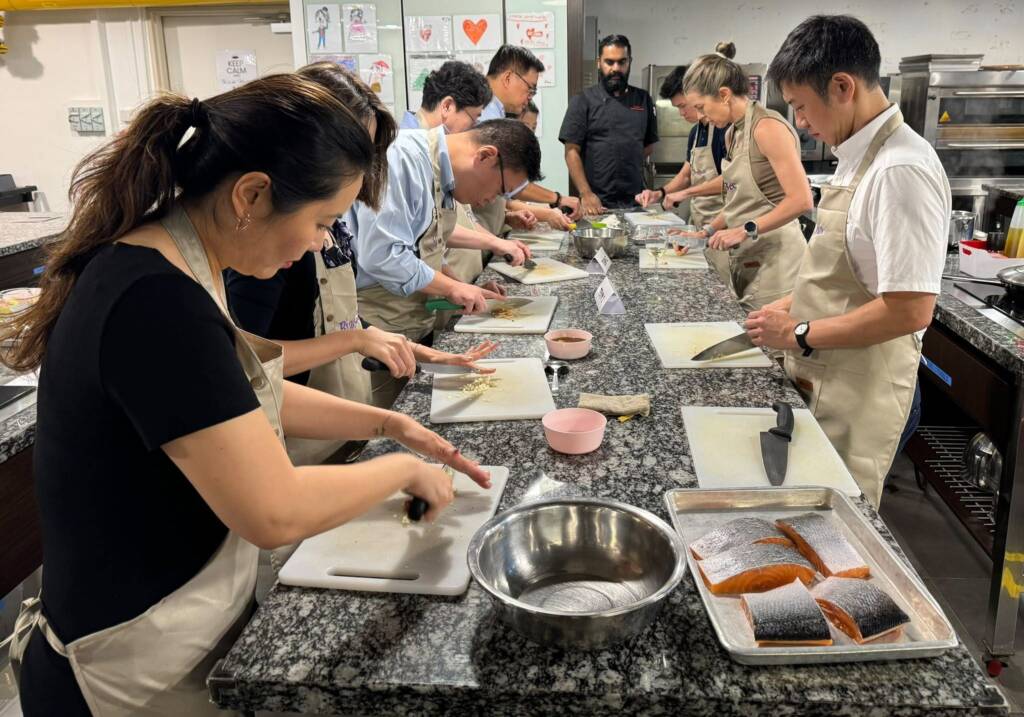 What can the team take away beyond the event?
Give the team a small, genuine reminder of the occasion rather than another assignment. A thank-you message, a few consented photographs or a shared memory can carry the warmth into the next working week. Ask what people enjoyed and use that feedback when planning the next gathering, without claiming the event has transformed team performance.
A short follow-up might mention a thoughtful contribution, a particularly imaginative presentation or simply how good it was to have everyone around the same table. Share photographs only with the appropriate permission, and avoid making attendance or public enthusiasm a test of commitment.
The year may have been busy, successful, difficult or all three. A good closing celebration makes room for that complexity while giving colleagues something pleasant to remember together.
Key takeaways
- Celebrate specific achievements and the quieter contributions that helped the team reach them.
- Choose a cooking format that matches the group’s appetite for activity and competition.
- Keep recognition warm and optional; protect time for a shared meal and conversation.
- Confirm menus, access needs, timings and any celebration additions in the event proposal.
- Send people away appreciated, without turning the celebration into another work task.
Frequently asked questions about year-end team building
What is a good year-end team building activity in Singapore?
Choose an activity that suits your team’s interests and lets people participate together. Cooking team building is one option that combines a shared task with time to enjoy food. Add a brief, specific thank-you for the year’s contributions and leave enough time for conversation.
Do colleagues need cooking experience to join Fun Team Bonding?
The Singapore Fun Team Bonding programme states that no prior cooking experience is needed. Discuss your group’s confidence and practical needs with the organiser when selecting the programme, and confirm what guidance and arrangements apply to your chosen event.
Can we include employee recognition in a cooking team building event?
You can ask the organiser how a short recognition moment might fit around the selected activity and dining time. Agree timing, setup and any materials in advance. Appreciation cards, speeches or other additions should not be assumed to be standard programme inclusions.
When should we enquire about a year-end team celebration?
Enquire once you have an approximate headcount, a preferred date range and an idea of the event’s purpose. Allow time to compare options and confirm practical needs. Availability varies; a general enquiry does not mean a date or event arrangement has been secured.
End the year around a table, together
A year-end celebration is a chance to pause long enough to notice what your team has built, and who helped make it happen. A shared cooking experience gives that thank-you something to gather around: a task, a meal and the people who have carried the year with you.
Explore our in-studio team building programmes in Singapore, or tell us your approximate group size, preferred dates and what you would like to celebrate. We can discuss which current format fits the occasion.
Talk to us about your year-end team celebration
About the author: Lynette Foo founded Palate Sensations in 2005. A trained culinary professional with a background in the corporate world, she brings experience in cooking and learning to Palate Team Building Singapore’s culinary events.