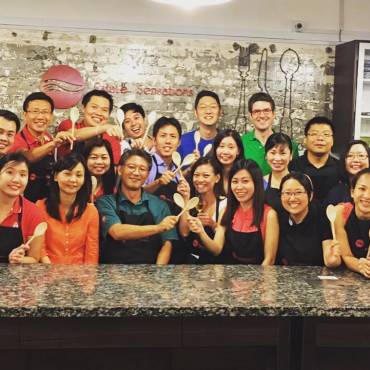
Companies should invest in team building because it directly and measurably improves employee engagement, interpersonal trust, and staff retention — three factors that determine how well a business actually performs. According to Gallup’s 2024 State of the Global Workplace report, disengaged teams cost the global economy US$8.9 trillion in lost productivity each year. Structured, well-facilitated team building is one of the most efficient tools available to leaders who want to reverse this trend before it costs them their best people.
There is a particular kind of quiet that can settle over a team that has been working together for months — or even years — without ever really getting to know each other. They share the same calendar invites, reply to the same message threads, and deliver the same quarterly results. But something is missing. The ease that makes honest conversations possible. The trust that makes difficult decisions easier. The sense of genuine connection that turns a group of individuals into a team that actually wants to succeed together.
Team building — done well — is what closes that gap. Not with trust falls or forced icebreakers, but with genuinely engaging shared experiences that create the kind of connection that travels back into the workplace long after the day ends.
Here are three compelling reasons why investing in team building is not a nice-to-have for Singapore companies in 2026. It is one of the most financially and culturally smart decisions a leadership team can make right now.
Reason 1: Employee Engagement Is Critically Low — and Your Business Is Already Paying for It
Here is a number worth sitting with: only 23% of employees worldwide describe themselves as engaged at work. That comes from Gallup’s 2024 State of the Global Workplace report — one of the most comprehensive employee surveys conducted globally. In practical terms, it means roughly three out of every four people are showing up to their jobs without fully showing up for them.
Disengaged employees are not simply less productive. They are more likely to call in sick, less likely to speak up with useful ideas, and significantly more likely to leave. Gallup estimates that low engagement costs the global economy US$8.9 trillion annually — approximately 9% of global GDP. For individual businesses, this shows up in real, measurable ways: slower output, higher absenteeism, missed innovation opportunities, and the considerable financial hit of replacing people who should have stayed.
Replacing a single employee typically costs between 50% and 200% of their annual salary, once recruitment, onboarding, and the inevitable drop in team productivity during the transition are factored in. For companies quietly accepting a steady stream of departures as simply “the nature of the market,” the cost is often far larger than it appears on any single line item.
The connection between team building and engagement is direct. Employees who feel genuinely connected to their colleagues are more engaged, more resilient under pressure, and significantly more likely to stay. Research consistently shows that having a close friend at work is one of the strongest predictors of employee satisfaction — and that kind of connection does not build itself through Zoom calls and shared project boards. It builds through shared experience: something to laugh about together, something accomplished, something remembered.
Team building is not the only lever in the engagement equation — but it is one of the few that leadership can directly and deliberately activate, at a defined cost, with measurable positive outcomes. That combination is surprisingly rare.
Reason 2: The Modern Workplace Has Changed — Teams Need Help Reconnecting
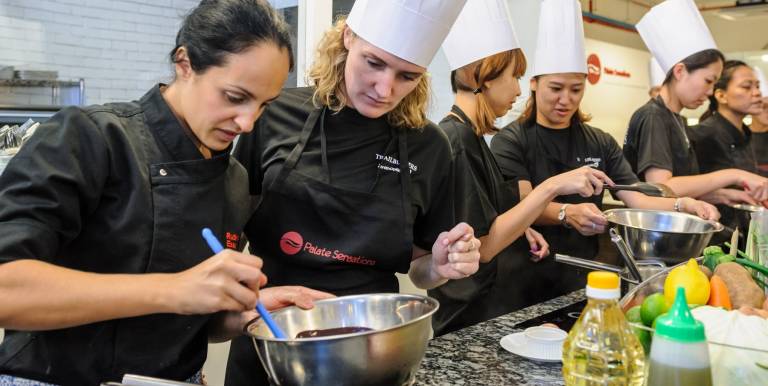
The years since 2020 have fundamentally changed how and where people work — and many of those changes are now permanent features of the working landscape, not temporary adjustments. Hybrid arrangements, flexible schedules, distributed regional teams, and rapid headcount changes have reshaped the texture of daily working life in ways that have been efficient and, in many cases, deeply isolating.
The informal connective tissue of the office — the corridor conversation, the shared lunch table, the chance encounter at the coffee machine that turns into a useful conversation — has been significantly reduced. For many teams in Singapore and across the region, the digital efficiency of the last few years has come at a quiet cost: genuine human connection.
This is not a soft problem. McKinsey research identifies psychological safety and interpersonal trust as critical factors in high-performing teams. Teams that trust each other take smarter risks, communicate more honestly, recover more quickly from setbacks, and collaborate more effectively on complex problems. None of these qualities develop automatically through Slack channels and performance dashboards.
For teams that have grown rapidly through hiring, restructured across departments, or simply been working in parallel without meaningful in-person contact for an extended period, the connection deficit is very likely already affecting performance — whether it shows up clearly in the data yet or not. You can often sense it before you can measure it: meetings that feel stiff, conversations that stay surface-level, collaboration that requires more chasing than it should.
In-person team building in 2025 and 2026 is not simply about having a good day out. It is about deliberately rebuilding the human dimension of work that distance and digital communication have quietly eroded. For teams with hybrid or geographically distributed members, a well-designed in-person experience is often the single most efficient way to fast-track the trust that remote work cannot replicate. The effort it would take to build that trust through normal working channels — if it would happen at all — is simply not realistic to leave to chance.
We explore this theme more deeply in our article on why building a cohesive team matters — and what the research says about the specific habits that make teams genuinely functional rather than just adequately functional.
Reason 3: Team Building Produces Real, Measurable Business Outcomes
The persistent misconception about team building is that it is a “feel good” investment — enjoyable, defensible as morale spending, but ultimately difficult to justify when budgets are under pressure. The evidence says otherwise — and has been saying so, with increasing consistency, for some time.
Research published jointly by the Queens School of Business and the Gallup Organization found that disengaged employees had 37% higher absenteeism, 18% lower productivity, and 15% lower profitability compared to their engaged peers. Conversely, business units in the top quartile for engagement achieved 21% greater profitability. The gap between a connected, engaged team and a disconnected one is not incidental. It is consistent and significant — and it shows up in line items that leadership absolutely recognises.
Beyond the engagement data, well-designed team building activities produce specific behavioural outcomes that benefit business performance directly:
- Improved day-to-day communication — shared experiences create shared reference points and comfortable communication channels that teams carry back into the workplace; the colleague you laughed with over a burnt caramel sauce is someone you will speak more honestly to in next week’s meeting
- Clearer natural leadership visibility — collaborative activities reveal who steps up, who supports, and who coordinates under mild pressure, in ways that a standard working environment rarely surfaces with the same clarity
- Stronger problem-solving under pressure — activities that involve time constraints and creative challenges mirror the demands of real workplace situations, building the muscle memory for calm, effective teamwork when the stakes are higher
- Greater psychological safety — teams that have worked through a challenge together in a low-stakes setting find it meaningfully easier to have honest, high-stakes conversations when they matter; trust earned in a kitchen carries surprising weight in a boardroom
- Reduced staff attrition — employees with genuine workplace friendships are significantly more likely to stay; the social ties built in team building are among the most durable retention factors available to any employer
These outcomes are not soft. They show up in retention figures, productivity data, and performance reviews. Team building, approached thoughtfully and facilitated professionally, is a strategic investment — and arguably one of the more cost-effective ones available, given what it delivers relative to what it costs. If your team is dealing with the dynamics described in our article on staff retention challenges in Singapore, team building is often where the practical response begins.
What Makes Team Building Actually Work
Not all team building is created equal — and the difference between a genuinely useful experience and a forgettable afternoon largely comes down to how well the activity is designed, facilitated, and followed through on. A few principles that consistently determine whether an investment in team building actually delivers:
- Choose activities that require genuine collaboration, not just co-location. Being in the same room is not the same as working together. The most effective team building involves shared problems, meaningful decisions, and the kind of productive pressure that draws people into real cooperation — rather than simply placing them at adjacent tables and hoping for the best.
- Make it enjoyable, not just instructive. People connect through joy, through laughter, through the specific warmth that comes from doing something together that is a little bit challenging and a great deal of fun. Activities that are creative, hands-on, and appropriately competitive tend to produce the lasting personal connections that more structured training programmes rarely manage — especially for people who would rather specialise in “supervising” than participate.
- Follow through with intention. The best returns from a team building day come when leadership deliberately maintains momentum afterwards — through cross-functional projects, informal communication channels, and regular social touchpoints that build on the goodwill created. An annual team building day with no follow-through is better than nothing. A team building day with deliberate follow-through is genuinely transformative.
How Palate Team Building Can Help
At Palate Team Building, we have been designing and facilitating culinary team building experiences for corporate groups in Singapore since 2005. Our programmes are built around the principle that cooking together creates something rare in a corporate context: a genuinely shared experience, with real stakes, real creativity, and real human connection — and something delicious waiting at the end of it.
Our in-studio team building programs accommodate corporate groups from 10 to 60 participants across a range of formats: competitive cooking challenges, collaborative culinary experiences, CSR baking for charity, fine dining restaurant simulations, and immersive culinary murder mystery events. Every session is professionally facilitated by experienced chefs and trained team building practitioners, and each programme can be customised around your group’s size, objectives, dietary requirements, and preferred level of friendly competition.

Our studio is located at Biopolis, a five-minute walk from Buona Vista MRT, with undercover parking and both indoor and outdoor dining space available. We have worked with more than 500 multinational and local companies including Google, Meta, Standard Chartered, LVMH, Singtel, and the Ministry of Education Singapore — and we bring the same standard of professional facilitation to every group, regardless of size.
“There is something wonderfully revealing about watching colleagues plan, chop, cook, taste, and laugh together. By the end of the session, they have not only created a meal — they have shared an experience that feels far warmer than another afternoon in a meeting room.”
— Lynette Foo, Founder, Palate Team Building Singapore
Key Takeaways
- Only 23% of employees globally are actively engaged at work (Gallup, 2024) — disengagement is not a niche problem, it is a near-universal one
- Disengaged employees cost the global economy US$8.9 trillion in lost productivity annually; replacing even one employee costs 50–200% of their annual salary
- Hybrid and remote work have reduced the informal human connection that builds team trust — team building is the deliberate, efficient fix
- Engaged business units outperform disengaged ones by up to 21% in profitability (Gallup / Queens School of Business)
- The most effective team building combines genuine collaboration, enjoyable shared experience, and deliberate follow-through from leadership
- Culinary team building in a professionally facilitated studio setting delivers all of the above — with a better ending than most office exercises
Frequently Asked Questions About Investing in Team Building
Why should companies invest in team building?
Companies invest in team building to improve employee engagement, strengthen interpersonal trust, and build the collaboration habits that drive better business outcomes. Teams that feel genuinely connected to each other perform significantly better — Gallup research shows that highly engaged business units outperform disengaged ones by up to 21% in profitability. Team building also plays a direct role in reducing staff turnover, which is one of the most significant and underestimated costs any organisation carries.
How often should companies invest in team building activities?
Most organisations benefit from at least one dedicated team building activity per year, with additional sessions for new hires, restructured teams, or periods of significant change. For companies with hybrid or geographically distributed teams, more frequent in-person experiences — even quarterly half-day sessions — can make a meaningful difference in maintaining connection across a dispersed workforce. The ideal frequency depends on how quickly your team is changing and how strong or fragile the current connection between team members feels.
What makes culinary team building particularly effective?
Culinary team building works especially well because cooking is inherently collaborative — it requires real decisions, clear coordination, and genuine problem-solving, all within an enjoyable and naturally low-pressure context. Unlike some team building formats that can feel abstract or manufactured, cooking gives everyone something concrete and purposeful to focus on together. The shared sensory experience of preparing and eating a meal also creates a warmth that most corporate activities find very difficult to replicate. It is team building, but with better snacks — and a far more lasting impression.
How do you measure the return on investment from team building?
Team building ROI can be measured through a combination of engagement survey scores, team performance metrics, absenteeism data, and staff retention rates — tracked before the activity and again 3–6 months afterwards. More informally, leaders often observe measurable improvements in communication quality, meeting dynamics, and cross-team collaboration in the weeks following a well-run session. The investment pays for itself most visibly when attrition drops even marginally — given that a single retained employee typically saves a company more than the full cost of the programme.
What is the best team building activity for corporate groups in Singapore?
The best team building activity for your group depends on your team’s size, culture, and what you most want to achieve — whether that is energising a large company-wide event, integrating a newly formed team, recognising a high-performing department, or simply giving a hard-working group a genuinely enjoyable shared experience. At Palate Team Building, our culinary programmes — from competitive cooking challenges and baking for charity to fine dining simulations and immersive culinary murder mystery events — accommodate groups from 10 to 60 participants, with customised formats available for larger events. We are happy to recommend the right fit during an initial conversation.
Read More
These articles explore related aspects of team performance and workplace culture in Singapore:
- The Importance of a Cohesive Team — and How to Build One — why cohesion is the foundation of every high-performing team, and what the research says about building it deliberately
- Struggling with Staff Retention? How Team Building Helps You Keep Your Best People — practical strategies for improving retention in the current Singapore talent market
Ready to Invest in Your Team?
If you are ready to give your team an experience that is genuinely engaging, professionally facilitated, and considerably more memorable than another afternoon in a meeting room — we would love to help you plan it.
Palate Team Building has been creating culinary team building experiences in Singapore since 2005. Our studio is at Biopolis, a five-minute walk from Buona Vista MRT, with full programme options across cooking, baking, dining, and mystery formats. Come hungry, come curious, and bring your team. The aprons are ready. Contact Us now.
About the Author: Lynette Foo is the founder of Palate Team Building Singapore and a formally trained culinary professional with a background from Le Cordon Bleu Paris. With over 20 years of experience facilitating corporate team building events for more than 500 multinational and local companies in Singapore, Lynette combines deep culinary expertise with a practical understanding of team dynamics, workplace engagement, and experiential learning. Last updated: May 2026.