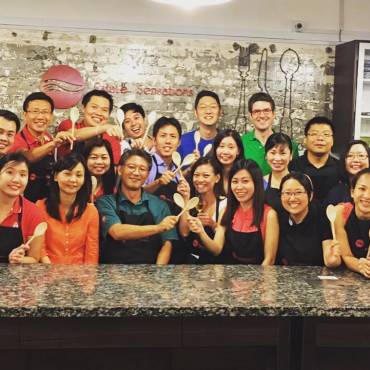
Many business meetings and contracts happen over a shared meal. How do you ensure you and your employees are appropriately equip to make a strong impression, show case your professionalism and build meaningful relationships? It is therefore essential that companies address corporate dining etiquette in Singapore to give their employees the edge for success.
Business dining skills training is not so daunting when you remember these pointers:
1. Before you turn up at the venue
It is important to understand what is the purpose of the meal. Is it a casual networking event or a formal negotiation or a business job interview or a celebratory dinner. Knowing this will help you prepare for the event itself, the types of questions to ask and what to wear.
2. Arriving at the venue
It is the height of rudeness to arrive late to a business meal so make sure you arrive at least 10 minutes early and settle in.
3. Mastering the art of small talk
Prepare a few neutral topics for discussion such as the weather or travel plans or hobbies before shifting to the business topic.
4. Understanding table settings and what it means
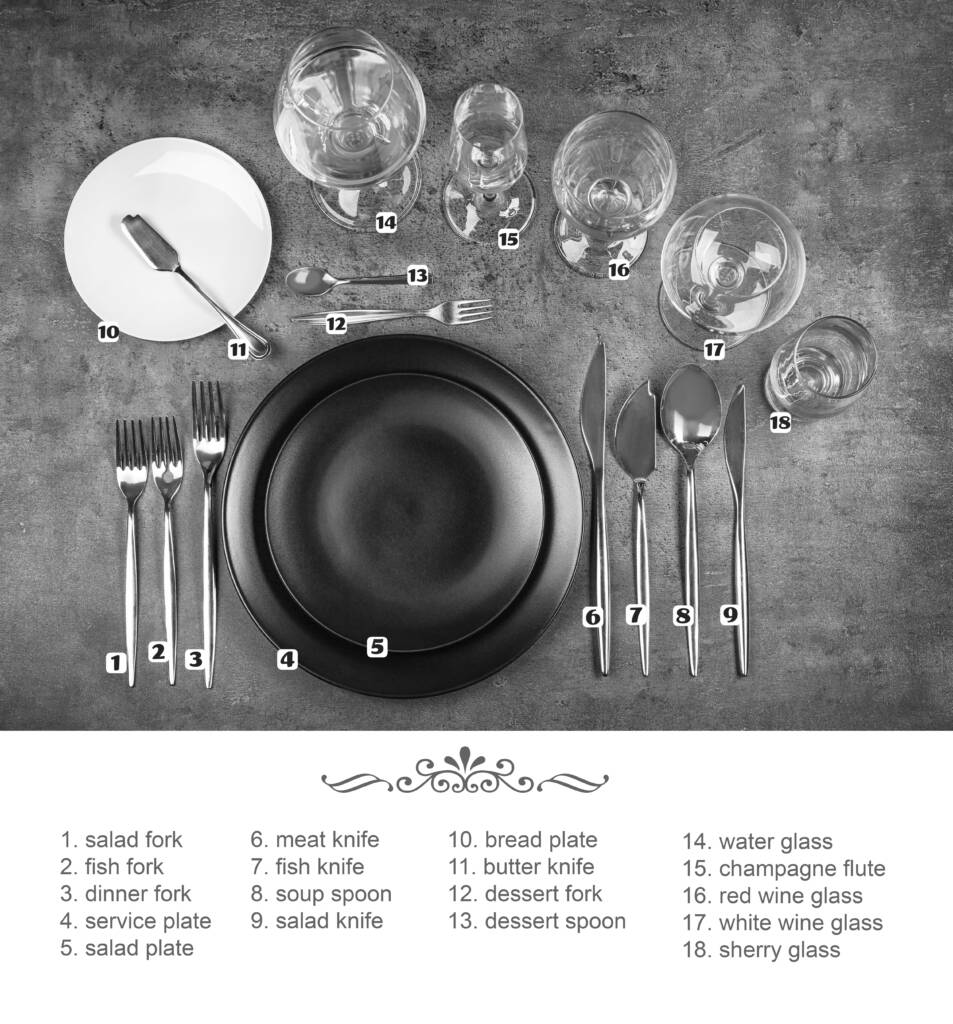
It can be very intimidating faced with a formal place setting with many glasses and utensils. The basic rule is to eat from the outside in ie: use the utensils furthest away from the plate for the first course and move inwards for subsequent courses.
5. Order wisely
Menu items that are hard to eat or messy such as noodles, spaghetti, shellfish, artichokes, pizza and hamburger should be avoided. This is a business meeting and not a feast so don’t order the most expensive item. Follow the host’s lead and be respectful of their recommendations.
6. Know where to put your napkin
Unfold your napkin quietly and place it across your lap. Use it discretely and only for dabbing the corners of your mouth when necessary. It is not for hiding soiled food. If leaving the table during the meal, fold the napkin neatly and place it next to the plate on the left or on the back of your chair.
7. Practice proper table manners
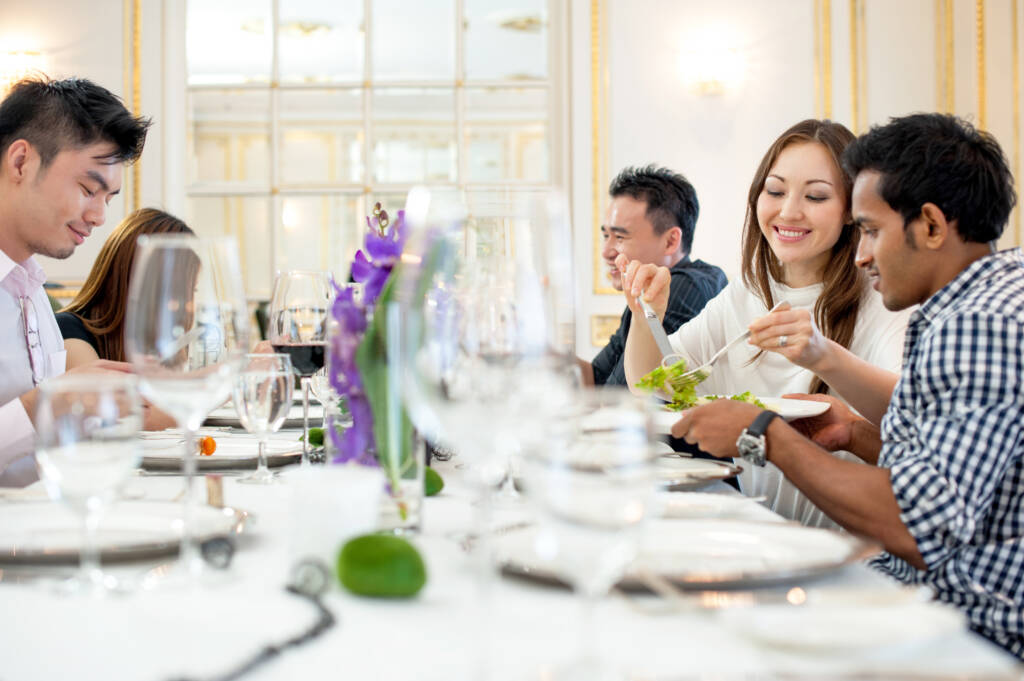
This includes chewing quietly with your mouth closed, keeping your elbows off the table, passing items to your right when asked and saying “thank you” and “please” when appropriate.
8. Use the bread and butter plate correctly
Take a piece of bread and break off one bite size piece at a time and butter each piece individually. The bread plate and knife is on the left of the table setting.
9. Watch how much you are drinking
Avoid drinking too much alcohol. In fact, it is best avoided so that you can keep your composure and remain professional. Sticking to water, coffee or tea is the best option.
10. Use your utensils correctly
From how to hold the cutlery in each hand to eat using the Continental or the American style, knowing the resting position, to how to signal you have finished eating, these fundamentals will showcase your table manners and professionalism.
Some final thoughts
When the meal concludes, if you are the host, ensure that you handle the payment gracefully and discretely. You should avoid awkward debate over who should settle the payment by letting the server know at the beginning to avoid any confusion or delay when the bill arrives.
Last but not least, do follow up after the business meal concludes by sending an email to show your gratitude, reinforce your professionalism and leave a lasting positive impression.
Dining etiquette training is essential for all employees who conduct business over a meal. Mastering table manners is a sign of respect and professionalism. At Palate Sensations Culinary School, we have trained many for success so if you are looking for a dining etiquette course for your employees, do contact us here and we can tailor a program just for you.